A new fly rod and reel come in pieces, and the first time you put them together it can feel like a puzzle. It isn’t. Every fly fishing setup is the same five parts connected in the same order, from the reel to the fly. Once you understand that system, setting up a fly rod takes just a few minutes.
This guide walks you through how to set up a fly fishing rod step by step: the backing, the fly line, the leader and tippet, the knots that join them, assembling the rod and reel, and how to string a fly rod without missing a guide.
The Fly Fishing Setup, From Reel to Fly
Here’s the whole system at a glance. Each part has a job, and each connection has a knot that’s right for it.
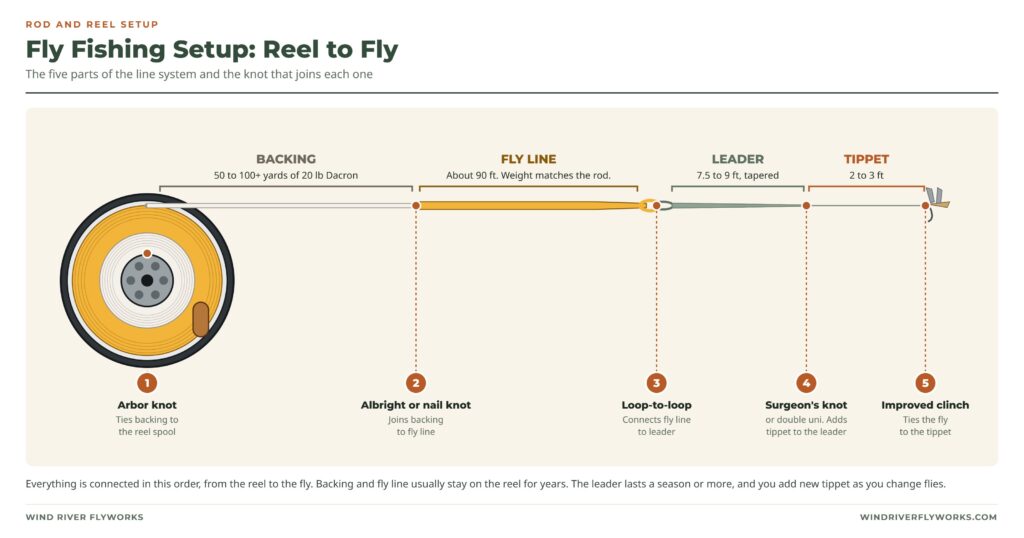
- Backing: thin, strong line (usually 20 lb Dacron) that sits on the reel under the fly line. It fills the spool so the fly line winds on in bigger, looser coils, and it’s there as insurance if a big fish runs.
- Fly line: the thick, colored line that you actually cast. It’s about 90 feet long, and its weight should match your rod (a 5-weight line on a 5-weight rod).
- Leader: a clear, tapered section, usually 7.5 to 9 feet, that gets thinner toward the end. It hides the connection between the thick fly line and the fly and helps the fly turn over.
- Tippet: the thinnest line at the very end, 2 to 3 feet long. You add new tippet as you change flies, so your leader lasts much longer.
- Fly: tied to the tippet, usually with an improved clinch knot.
Want the full details on leaders? Read our leader and tippet setup guide. For step-by-step diagrams of each knot below, see our fly fishing knots guide.
Step 1: Put the Backing on the Reel
Many reels come from the shop with backing and fly line already on them. If yours did, skip ahead. If not:
- Decide which hand will reel. Most anglers reel with the hand that doesn’t cast, so a right-handed caster reels left-handed. Many reels can be switched; check the instructions before you add line, because the line has to go on in the right direction.
- Tie the backing to the spool with an arbor knot. Wrap the backing around the spool, tie an overhand knot around the standing line, then tie a second overhand knot in the tag end and pull it snug against the spool.
- Wind it on tight and even. Keep light tension on the line with your fingers and wind it on level, side to side. Loose backing can bury itself under pressure.
- How much? Your reel’s spec sheet lists its capacity. As a rule of thumb, trout reels hold 50 to 100 yards of 20 lb backing with the fly line.
Step 2: Attach the Fly Line to the Backing
Connect the back end of the fly line to the backing with an Albright knot or a nail knot. Both are smooth and slim, so they slide through the guides if a fish takes you into your backing.
Many fly lines have a label on the box or a tag on the line marking which end goes to the reel. The front end, which tapers, goes toward the fly. Wind the fly line onto the reel the same way as the backing: snug and even, with no twists.
Step 3: How to Attach Fly Line to a Leader
Most modern fly lines have a small welded loop on the front end, and most store-bought leaders come with a loop on the thick end. Join them with a loop-to-loop connection:
- Pass the leader’s loop through the fly line’s loop.
- Feed the entire leader (thin end first) back through the leader’s own loop.
- Pull the two loops together so they lock like a square knot, not like a girth hitch.
If your fly line has no loop, a nail knot works well. Loop-to-loop is popular because you can swap leaders in seconds.
Step 4: Add Tippet
Tie 2 to 3 feet of tippet to the end of your leader with a surgeon’s knot or a double uni knot. Use tippet that’s the same size as the end of the leader, or one size smaller. For most trout fishing, 4X or 5X is a good place to start.
Step 5: Assemble the Rod and Seat the Reel
Now put the rod together and string it. Here’s how to string a fly rod the easy way:
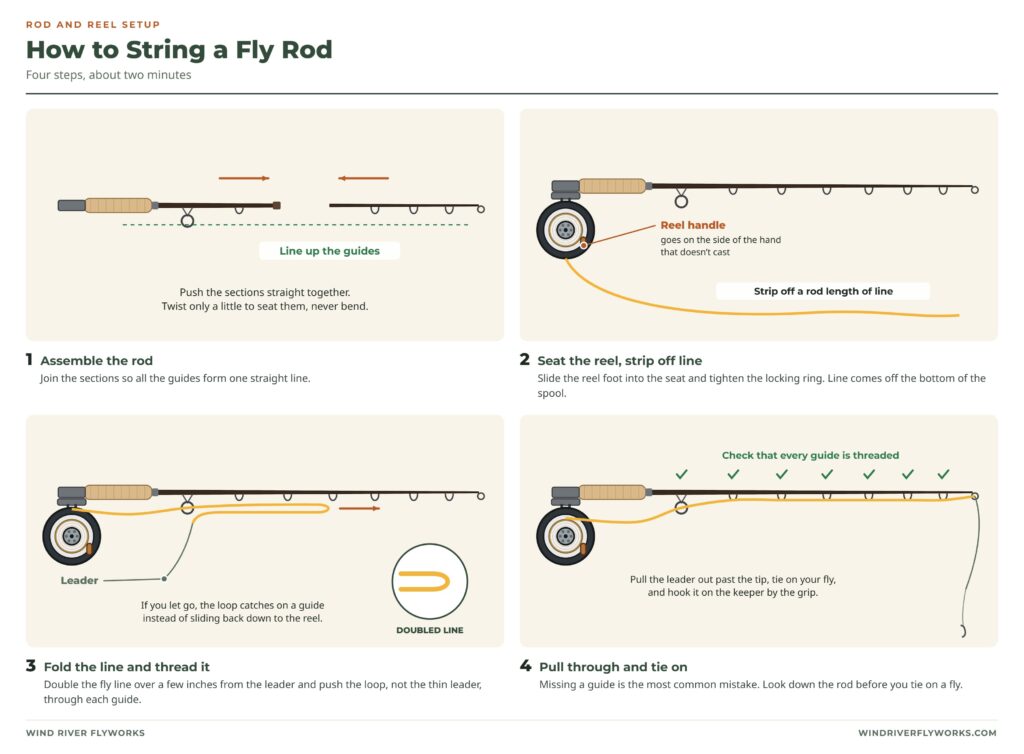
- Assemble the rod. Line up the guides and push the sections straight together. A small twist helps them seat, but never bend a rod to join it. Start with the tip section and work down toward the handle.
- Seat the reel. Slide the reel foot into the reel seat below the grip and tighten the locking ring by hand. The reel hangs below the rod, with the handle on the side of the hand that doesn’t cast.
- Strip off line. Pull off about a rod’s length of fly line plus the leader and lay it on clean ground or grass, not on sand or gravel.
- Double the line. Fold the fly line over a few inches from the leader and push that loop through the guides, not the thin leader. If you let go, the folded line catches on a guide instead of sliding all the way back down.
- Check every guide. Missing a guide is the most common setup mistake. Look down the rod before you go on.
- Pull the leader out past the tip and you’re ready to tie on a fly.
Step 6: Attach the Fly
Tie your fly to the tippet with an improved clinch knot. Wet the knot before you pull it tight, trim the tag end, and hook the fly on the hook keeper by the grip until you’re ready to cast. Not sure which fly to start with? See our guide to choosing flies.
Common Setup Mistakes
- Reel handle on the wrong side. Decide this before you put line on the reel.
- Line wound on backwards. The line should come off the bottom of the spool, toward the rod, not over the top.
- A missed guide. Your line won’t shoot, and you can damage the rod. Always look before you cast.
- Line weight doesn’t match the rod. A 5-weight rod needs a 5-weight line to cast well. See why the right rod matters.
- Tippet too heavy for the fly. Small flies need fine tippet to drift naturally.
Taking It Apart
At the end of the day, reel the line back on, then break the rod down by twisting the sections gently apart. Store it in its tube. If you fished saltwater or muddy water, rinse the reel and wipe the line.
Final Thoughts
Every fly fishing setup comes down to the same chain: reel, backing, fly line, leader, tippet and fly. Learn the five knots that connect them, string your rod with the line doubled, and check each guide. Do it a few times at home and it will soon take two minutes on the water. Then it’s time to learn how to cast a fly rod.
Shop This Article
Stickers and gear that go with this guide, drawn by Nick and printed in the USA.
-
Trout Series Fishing Gloves
$17.99 Select options This product has multiple variants. The options may be chosen on the product page