Open almost any trout angler’s fly box and you’ll find an Elk Hair Caddis. It’s been fooling trout for more than sixty years, and it’s still tied almost exactly the way its inventor first tied it. But the most famous caddis dry fly in the world started out as something else entirely: a wet fly that refused to sink.
This is the story of the Elk Hair Caddis, the Pennsylvania schoolteacher who created it, and how a happy accident on a small eastern creek became a fly-box classic. If you want to know how to fish it, see our guide on how to fish an Elk Hair Caddis.
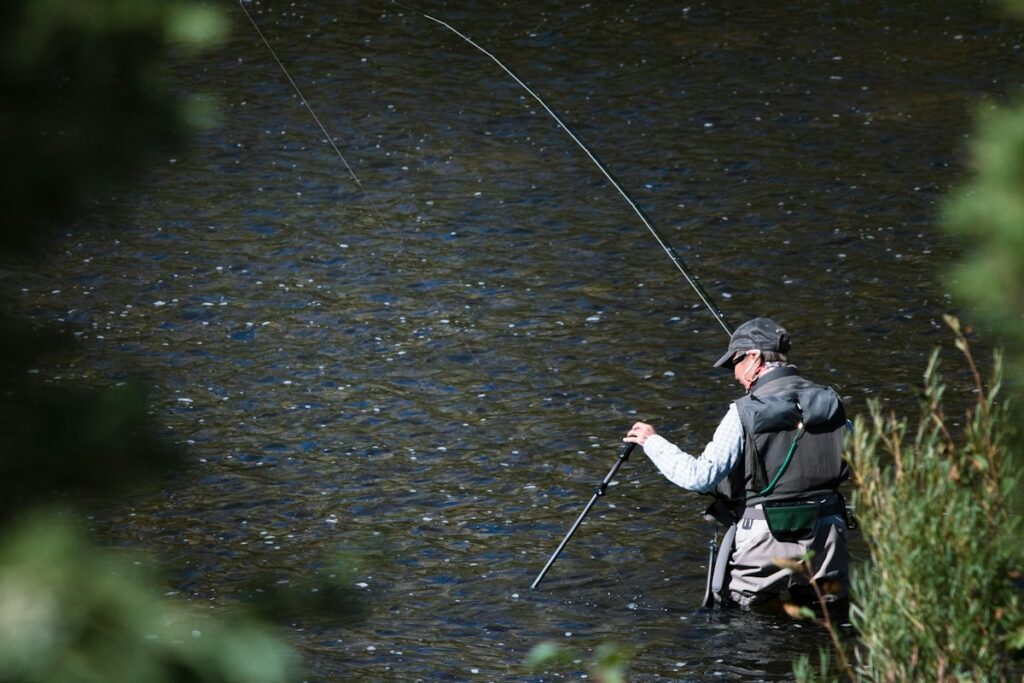
More than sixty years after it was invented, the Elk Hair Caddis is still one of the first flies anglers tie on. Photo: Glen Rushton on Unsplash.
Who Was Al Troth?
Alfred “Al” Troth was born on May 30, 1930, in Monessen, Pennsylvania, a steel town on the Monongahela River south of Pittsburgh. He started fishing as a boy and never really stopped.
Troth lived a very ordinary working life before fly fishing became his career. He worked for a steel company, served four years in the Navy, and then spent about fifteen years teaching machine shop at a Pennsylvania high school. In his spare time he fished the trout streams of his home state and tied his own flies, and that’s where his precise, practical approach to fly design came from.
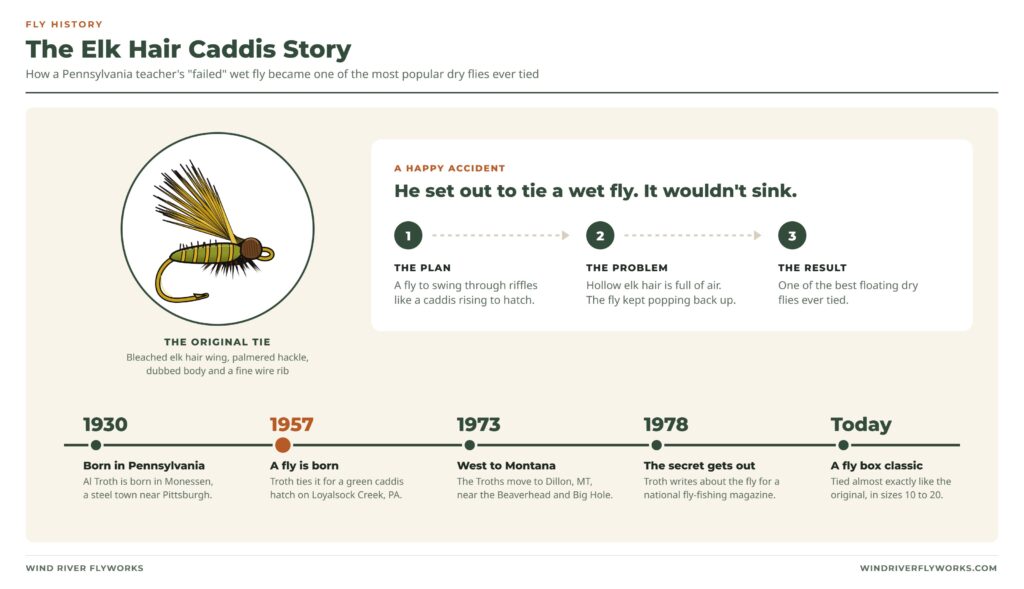
1957: A Wet Fly That Wouldn’t Sink
In 1957, Troth was fishing a green caddis hatch on Loyalsock Creek, a freestone trout stream in north-central Pennsylvania. He wanted a fly he could swing through the riffles to imitate caddis rising to the surface to hatch.
His idea borrowed from flies he already liked. Palmered flies, with hackle wound along the whole body, were favorites of his, and the English writer G. E. M. Skues had used a hair wing on his Little Red Sedge. Troth tied a dubbed body, wound hackle along it, held it down with a fine wire rib, and topped it with a wing of bleached elk hair so he could see it on the water.
There was just one problem with his new wet fly: it wouldn’t stay under. Elk hair is hollow, and each hair is full of tiny air pockets. Combined with the stiff hackle, the wing made the fly float like a cork. Instead of fighting it, Troth fished it on top, and the trout loved it. He had accidentally tied one of the best floating dry flies ever made.

Eastern freestone creeks with riffles and boulders are where the Elk Hair Caddis was born. Photo: Alex Moliski on Unsplash.
Why the Design Works So Well
The Elk Hair Caddis has stayed popular because every part of it does a job:
- The elk hair wing floats, holds the fly upright and is easy to see. Its tent shape looks like the folded wings of a resting caddisfly.
- The palmered hackle helps the fly ride high in fast, broken water and looks like legs and fluttering wings.
- The wire rib protects the hackle from trout teeth, so one fly lasts through many fish.
- The simple recipe makes it fast to tie, cheap to buy and easy to change in size and color.
It’s also versatile. You can dead-drift it, skitter it like an egg-laying caddis, use it to hold up a nymph as a dry-dropper, or even swing it, the way Troth first meant to fish it.
From Pennsylvania to Montana
For years the Elk Hair Caddis was mostly Troth’s secret. He made many trips west, and in 1973 he moved his family to Dillon, Montana, close to the Beaverhead and Big Hole Rivers. There he became a well-known guide and professional fly tier, and his work appeared in books and magazines. He was on the cover of Fly Fisherman magazine three times.
Western rivers, with their huge caddis hatches and fast riffles, were the perfect place for the fly to prove itself. It was sold through West Yellowstone fly shops, and in 1978 Troth wrote about the pattern for a national fly-fishing magazine. After that, the Elk Hair Caddis spread quickly to fly shops and fly boxes around the world.

Big western rivers with heavy caddis hatches made the fly famous. Photo: Bryn Gibson on Unsplash.
The Original Recipe, Then and Now
One of the most remarkable things about the Elk Hair Caddis is how little it has changed. Troth’s original tie used:
- Hook: a standard dry-fly hook in sizes 12 to 18
- Rib: fine copper or gold wire
- Body: dubbed fur
- Hackle: a rooster hackle wound (palmered) along the body
- Wing: bleached elk hair, with the butts trimmed to form a small head
Today’s version is nearly identical. Tiers now make it in sizes 10 to 20 and in tan, olive, black, gray and orange to match different caddis. There are also hackle-less versions for flat water and big ones that imitate stoneflies and moths. But the core idea is the same one Troth came up with on Loyalsock Creek.
Al Troth’s Legacy
Troth designed other patterns too, but none matched the Elk Hair Caddis. He guided and tied flies in southwest Montana for decades and died in Dillon on August 3, 2012, at the age of 82. Every time an angler ties on an Elk Hair Caddis, they’re fishing a little piece of his story.
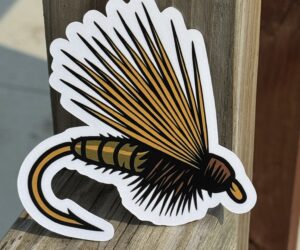
It’s also one of our favorite flies, which is why it’s one of our Elk Hair Caddis stickers. Ready to put the history to work? Read How to Fish an Elk Hair Caddis, or browse more articles on our Flies & Tips page.
Keep reading
- The Elk Hair Caddis: Why Every Fly Box Needs One: why this one fly belongs in every box
- How to Fish an Elk Hair Caddis: when to tie it on and four ways to fish it
Shop This Article
Stickers and gear that go with this guide, drawn by Nick and printed in the USA.