Some of the biggest trout in a river make a living eating some of the smallest bugs. Midges hatch every month of the year, they’re in nearly every trout stream, and on many tailwaters and spring creeks they make up most of what trout eat. If you’ve ever watched fish rising steadily and refusing every fly you own, there’s a good chance they were eating midges.
This deep dive covers what midges are, how their life cycle works, which small flies to carry, how to rig them and how to fish them. Small flies take a little more patience, but they open up winter fishing and can save the day on picky fish any time of year.
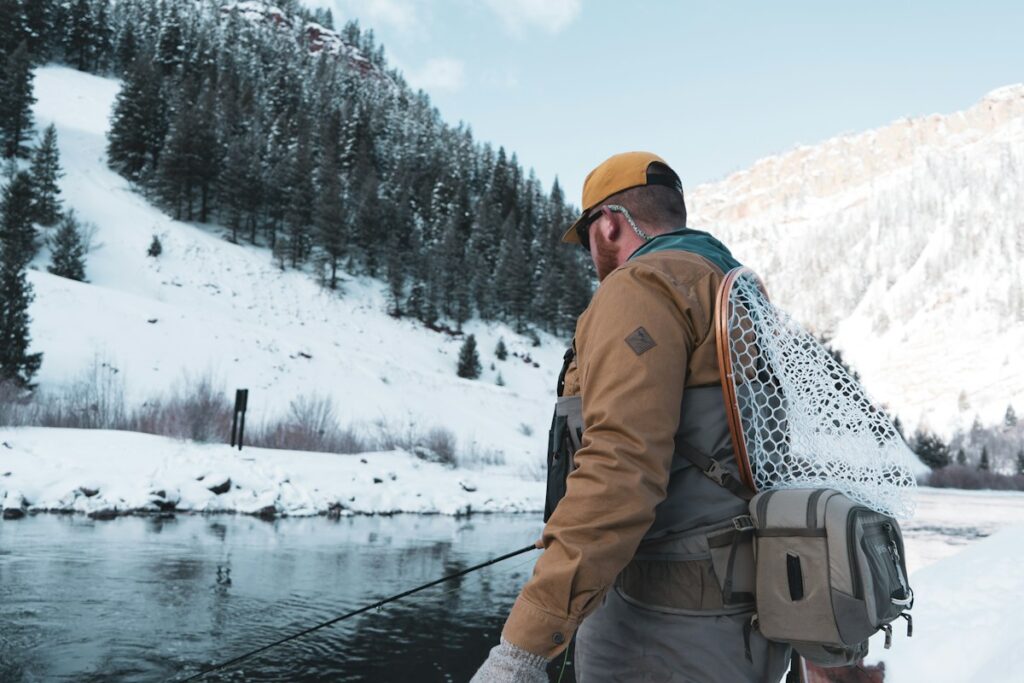
Cold, clear winter days are prime midge time, when they are often the only bugs hatching. Photo: Matt Morse on Unsplash.
What Is a Midge?
Midges are tiny two-winged flies in the family Chironomidae. Adults look like small mosquitoes, but they don’t bite. They’re usually black, gray, olive, cream or red, and most of the ones trout eat would be tied on hooks from size 18 to size 26.
They hatch all year. Midges are often the only bugs hatching in winter, which makes them the key to cold-weather fishing.
They’re everywhere. Slow, rich water like spring creeks, tailwaters below dams and the soft edges of rivers can hold thousands per square foot of bottom.
Trout eat them in huge numbers. A single midge is a small meal, but trout can sip them steadily without spending much energy.
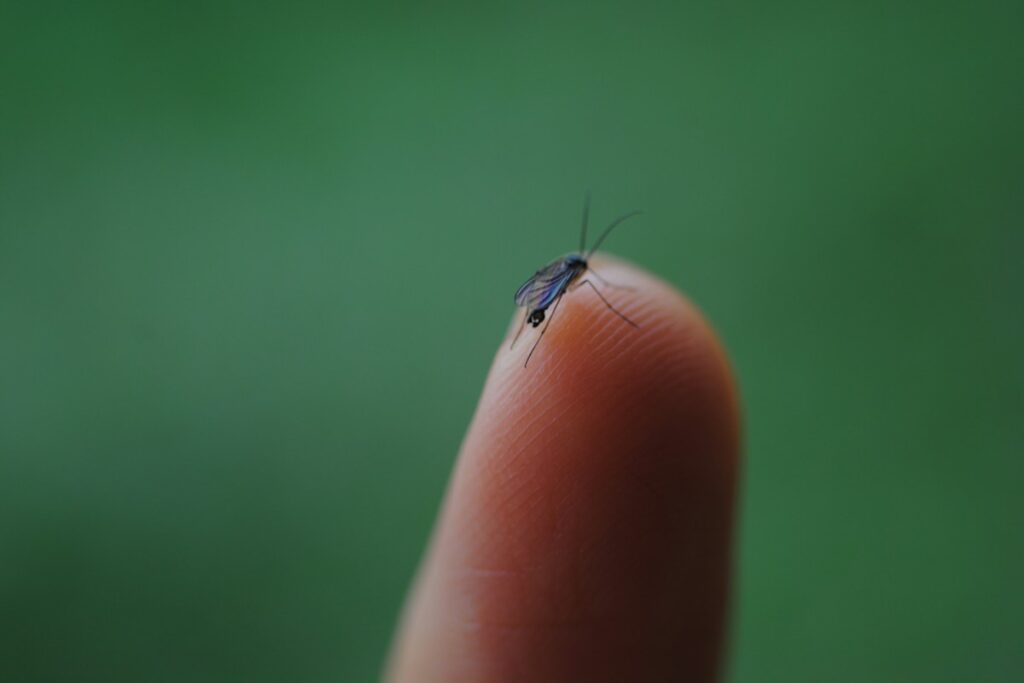
Midges are tiny. Most are smaller than a grain of rice. Photo: t Penguin on Unsplash.
The Midge Life Cycle
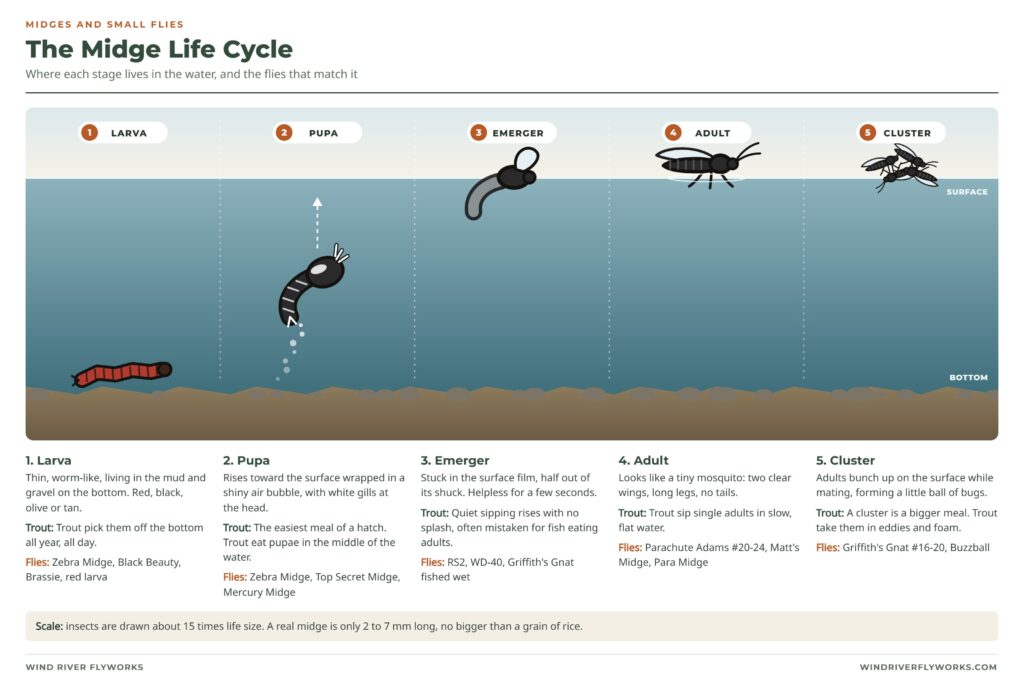
Midges go through four stages, and trout eat all of them. The key to fishing midges is figuring out which stage the fish are eating and where in the water they’re eating it.
Larva: thin and worm-like, living in the mud and gravel. Trout root them off the bottom all year, which is why a small larva pattern under an indicator works even when nothing is hatching.
Pupa: when it’s time to hatch, the larva changes into a pupa and drifts up toward the surface, often with a shiny bubble of gas around it. This is the stage trout eat most during a hatch.
Emerger: the adult struggles out of its shuck in the surface film. Trout sip these with quiet, splashless rises that look like they’re taking adults.
Adult and clusters: adults ride the surface, and on calm days they bunch into mating clusters. A cluster is a bigger meal, and that’s what a Griffith’s Gnat imitates.
Reading the rises: if you see backs and tails but no noses, trout are probably eating pupae just under the surface. If you see noses breaking the surface, they’re eating emergers or adults on top.
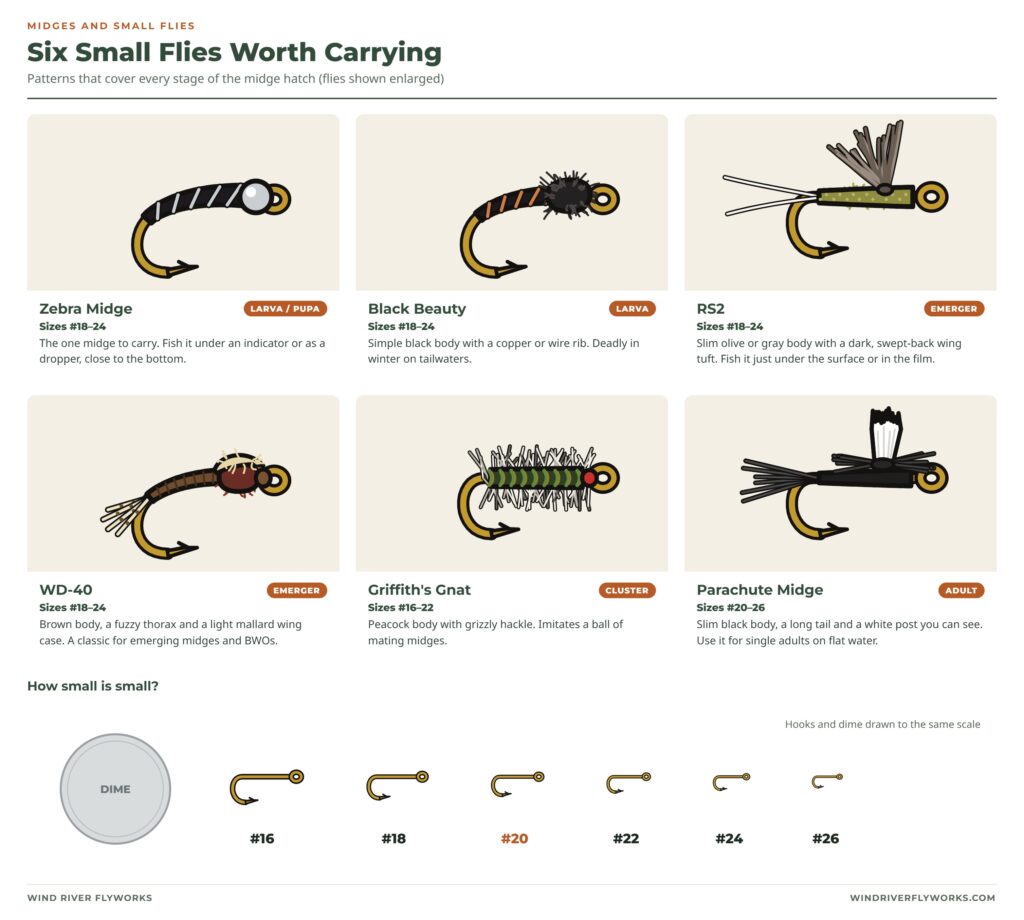
Small Flies to Carry
You don’t need a hundred midge patterns. A handful of proven flies in sizes 18 to 24 will cover almost every situation. Black, gray, olive and red cover most midges.
Our short list:
Zebra Midge: if you only carry one midge, carry this one. Black with a silver rib and bead, in sizes 18 to 22. Red and olive versions are good too.
Black Beauty: a simple, sparse larva that’s deadly on tailwaters in winter.
RS2 and WD-40: emerger patterns to fish in or just under the surface film when trout are sipping.
Griffith’s Gnat: the classic dry for midge clusters. Fish it dry, or let it sink just under for emerging midges.
Parachute midge or a small Parachute Adams: a high-visibility dry for single adults on flat water. See our article on the Adams for why a size 20 Parachute Adams catches so many fish during midge hatches.
It also pays to carry other small flies for the times trout get selective: blue-winged olive nymphs and dries in sizes 18 to 22, tiny Pheasant Tails, and small ants and beetles in summer.
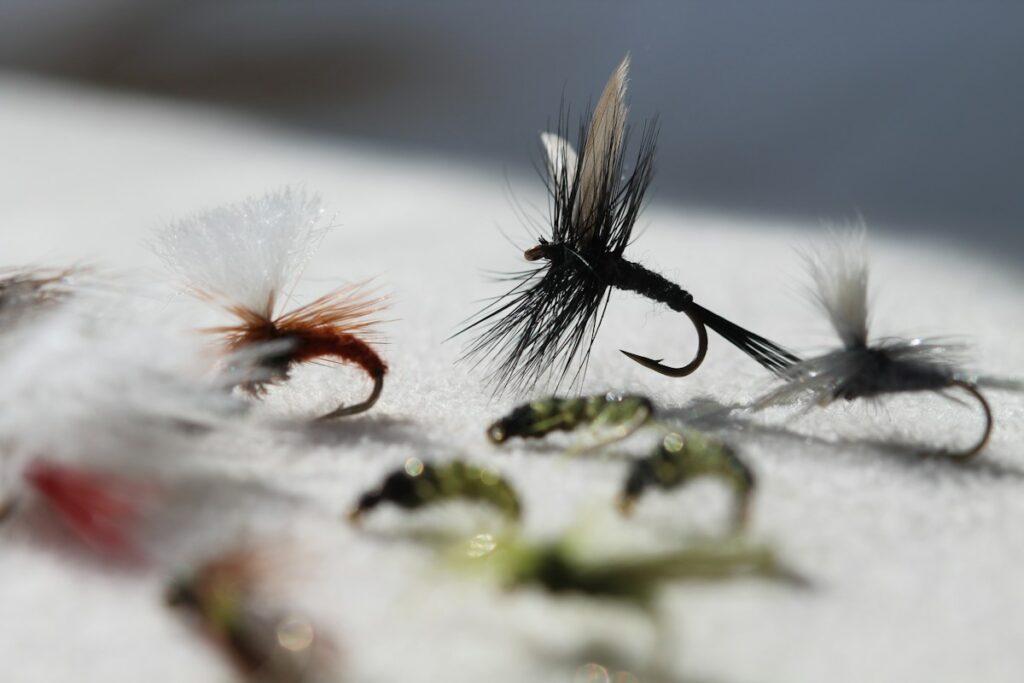
Small flies are easy to lose. Keep them in their own box, sorted by size. Photo: Anne Nygård on Unsplash.
How to Rig Midges
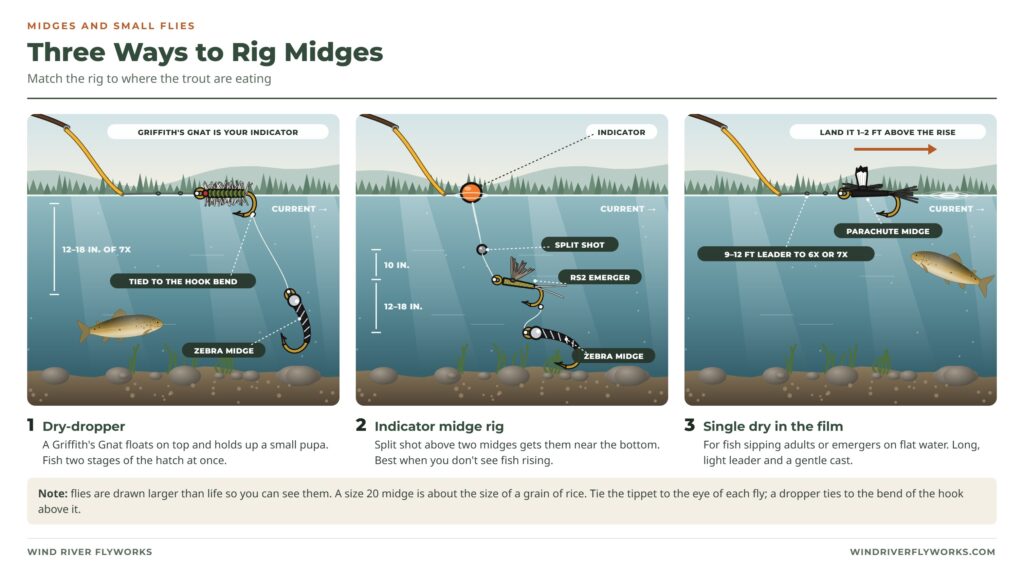
Match the rig to where the trout are eating. If you’re not sure, start with an indicator rig and switch to a dry-dropper or a single dry once you see fish rising.
Leader and tippet
Use a 9 to 12 foot leader tapered to 6X, and add 7X for the smallest flies and the clearest, slowest water.
Fluorocarbon tippet sinks and is harder for trout to see, so it’s a good choice for subsurface midges. Use nylon for dry flies.
Use an improved clinch knot or a Davy knot to tie on small flies, and wet every knot before you tighten it. See How to Tie Fly Fishing Knots for step-by-step instructions.
How to Fish Midges
Go small and light on the indicator. A small yarn or foam indicator lands softly and shows the lightest takes.
Get the depth right. For larvae, your bottom fly should tick the bottom now and then. Adjust the indicator until it does.
Pick one fish. When trout are rising, choose a single fish, time its rises and put your dry 1 to 2 feet above it.
Get a perfect drift. Tiny flies on flat water show every bit of drag. Use a reach cast or a downstream presentation so the fly reaches the fish before the leader.
Can’t see your fly? Fish a tiny midge behind a bigger, more visible dry like a size 16 Parachute Adams and watch the big fly. If a fish rises near it, set the hook.
Set gently. With 7X tippet and small hooks, a light lift of the rod is enough. Play fish with a soft hand and a bent rod.
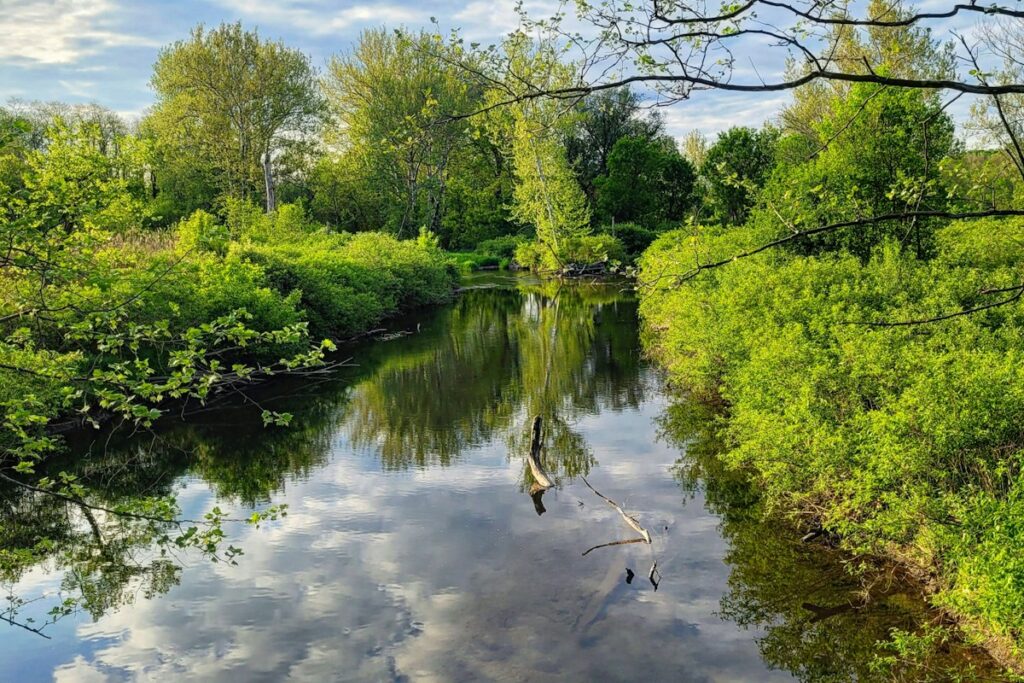
Spring creeks and tailwaters are where midge fishing shines. Photo: Court on Unsplash.
When to Fish Midges
Winter: midges are the main hatch. Fish the warmest part of the day, usually late morning to mid-afternoon, especially on calm, overcast days.
Tailwaters and spring creeks: steady water temperatures mean good midge fishing all year.
Early and late in the day: even in summer, midges often hatch at dawn and dusk, before and after the bigger bugs.
Picky fish: whenever trout are rising and ignoring your usual flies, try going smaller.