Most trout eat nymphs under the surface, and most of those strikes are so soft you’ll never feel them. Strike indicators are floats on your leader that show you the take. They also hold your flies at the right depth and help you read the drift.
No single indicator is best everywhere. Yarn wins on spooky, slow water. A plastic bobber wins for beginners and heavy rigs in fast water. Picking the right one for the water in front of you catches more fish than any fly change.
The Types of Strike Indicators
Yarn
A tuft of yarn tied or clipped to the leader, often with a little floatant on it. It lands softer than anything else and shows the slightest pause in the drift. It’s also easy to move and easy to cast. The downside is that it can sink when it soaks through, and it won’t float a heavy tungsten rig in fast water. Best for: spooky fish, flat water and light nymphs.
Foam
Foam comes as stick-on pads, pinch-on dots and slide-on foam floats. The stick-ons are cheap and easy, and a good fit for kids or a quick switch. But they lose their stick, they’re hard to move once placed, and they can leave gunk on the leader. Best for: casual fishing and light setups.
Hard plastic bobbers
This group includes the Thingamabobber and other round plastic floats. They float high all day, even with heavy flies and split shot, and they’re easy to see in rough water. The trade-off is a loud splash when they land and a hinge in the cast. Best for: beginners, fast or deep water, and heavy rigs.
Air-Lock style
A hollow ball with a screw-on cap that clamps the leader. You can slide it to a new depth in seconds without kinking the line. It floats high like a plastic bobber and casts a little better. Best for: anglers who change depth often during the day.
Putty
A moldable float you press onto the leader. You can size it to match your flies and slide it to a new depth easily. It gets less buoyant in cold water and wears out with use. Best for: small, light nymphs and fine-tuning.
Dry-dropper
A buoyant dry fly, like a Chubby Chernobyl or a hopper, with a nymph tied off its bend. The dry is your indicator, and fish often eat it too. It can’t float a heavy nymph or reach deep water. Best for: summer, shallow runs, and hopper season.
Sighter (no float)
Euro and tight-line anglers skip the float. They watch a short colored section of the leader, called a sighter, for a twitch or a stop. It’s the most sensitive method in short, close-in water. It takes practice and doesn’t work far from you. Best for: pocket water and experienced nymph anglers.
Strike Indicators Side by Side
Indicator | Sensitivity | Floats heavy rigs | Landing | Easy to adjust | Best water |
Yarn | High | Fair | Very quiet | Yes | Slow, clear, flat |
Foam | Medium | Poor | Quiet | No | Easy, shallow runs |
Hard plastic | Low to medium | Excellent | Loud | Somewhat | Fast, deep, choppy |
Air-Lock style | Medium | Very good | Medium | Yes | Mixed water, all day |
Putty | Medium to high | Poor | Quiet | Yes | Small nymphs, calm water |
Dry-dropper | Medium | Poor | Quiet | Somewhat | Shallow summer runs |
Sighter | Highest | Not needed | None | Yes | Close-in pocket water |
Which Strike Indicator Is Best?
If you carry only one, carry an Air-Lock style indicator. It floats real nymph rigs, moves in seconds and lands softer than a plastic bobber. It handles most western rivers and Midwest spring creeks well enough.
If you can carry two, add yarn. Then let the water decide:
- Fast, deep or choppy water with heavy flies: hard plastic or Air-Lock.
- Slow, clear water with picky fish: yarn.
- Summer and hopper season: skip the float and fish a dry-dropper.
- Close-in pocket water: a sighter, if you’ve learned to tight-line.
- Kids and new anglers: a plastic bobber. It’s easy to see and hard to sink, and that keeps the day fun.
How to Set Up Strike Indicators
- Start at about 1.5 times the water depth. Your leader angles downstream in the current, so the flies need extra line to reach the bottom. In 3 feet of water, set the indicator about 4 to 5 feet above the flies.
- Adjust until you tick bottom. If you never snag, go deeper. If you snag every cast, move the indicator down a few inches.
- Size it to the rig. The indicator should float your flies and shot without being dragged under. Too big just means more splash and a weaker signal.
- Mend so it drifts with the bubbles. An indicator that drags faster than the foam line is pulling your flies unnaturally. Mend upstream to slow it down.
- Set on anything odd. A dip, a pause, a sideways twitch. Setting the hook costs nothing, and most “snags” turn out to be fish.
Before Your Next Trip
Carry an Air-Lock style indicator and some yarn, and match them to the water. That covers almost every nymphing day on the river. Then watch for the pause and set the hook.
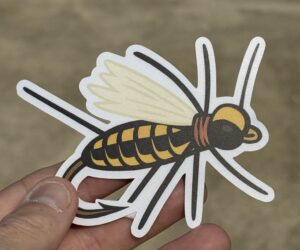
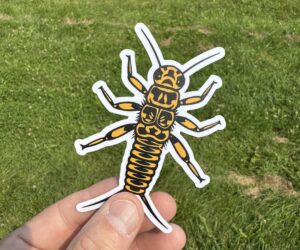
Want a fly fishing reminder off the water? Check out our Chubby Chernobyl and Golden Stone stickers, and the rest of our fly fishing art at Wind River Flyworks.
Flies in This Guide
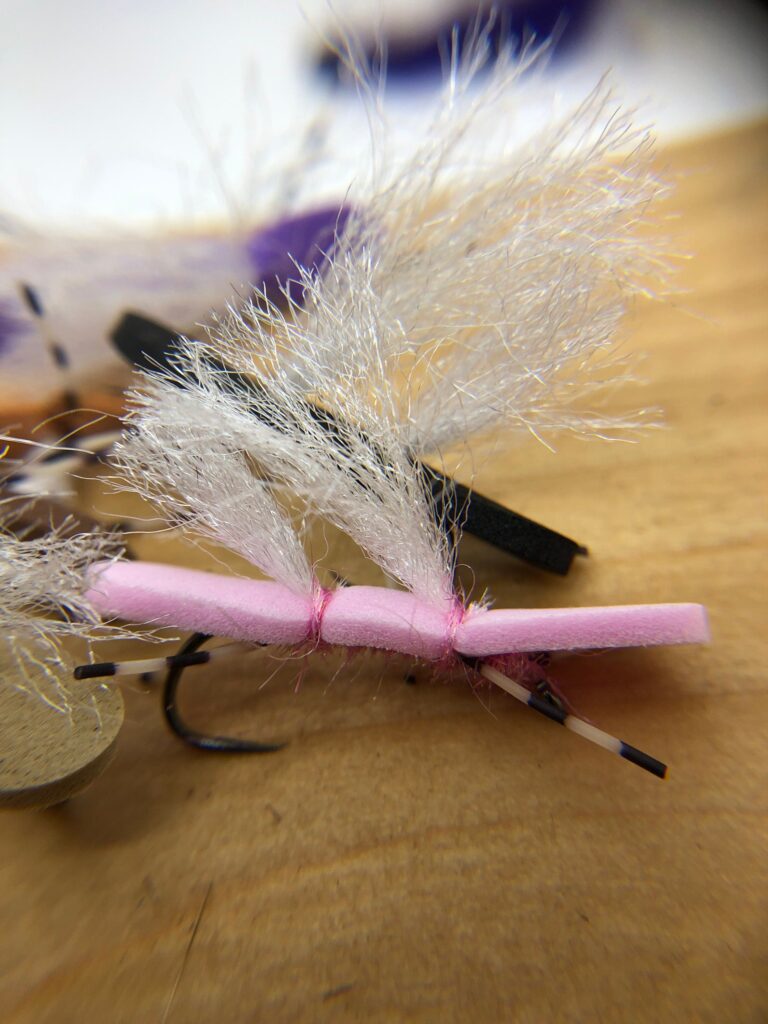
Chubby Chernobyl
Get it from Jacobs Fork →
Flies tied by Jacobs Fork Fly Tying, photos used with permission. We don’t earn anything from these links.
Shop This Article
Stickers and gear that go with this guide, drawn by Nick and printed in the USA.