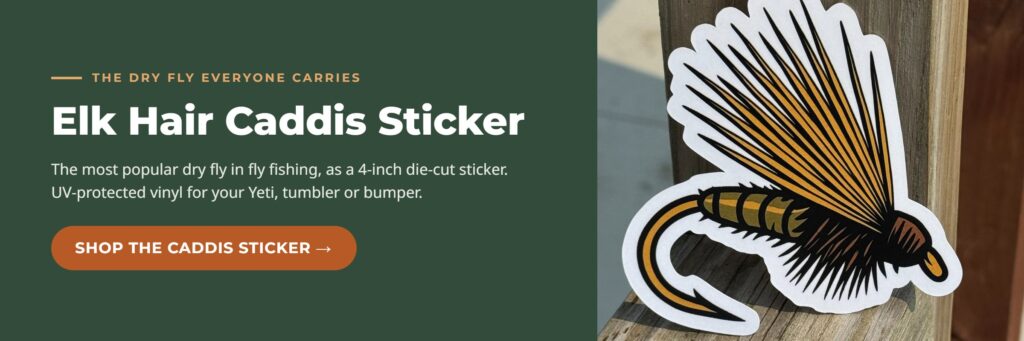
If you could carry only one dry fly, a lot of anglers would pick the Elk Hair Caddis. Al Troth created it in 1957 and first fished it on Loyalsock Creek in Pennsylvania. More than 60 years later, it’s in nearly every fly box in the country.
There are three good reasons:
It floats like a cork. Elk hair is hollow, so the fly rides high even in fast, broken water.
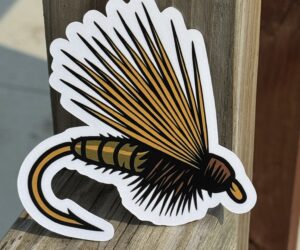
It’s easy to see. The light wing stands out on the water, even in low light.
It looks like a lot of things. It’s a “searching” fly that suggests many bugs at once, so it works even when nothing is hatching.
What It Imitates
The Elk Hair Caddis was tied to imitate an adult caddisfly, the small, moth-like bug you see fluttering over the water on summer evenings. Caddis hatch on almost every trout stream, from Driftless spring creeks to big western rivers, so trout see them all season long.
It also does a good job as a small stonefly, and in bigger sizes trout will take it for a hopper or moth along grassy banks. That versatility is a big part of why it catches fish everywhere.
What Sizes and Colors to Use
The Elk Hair Caddis is tied in sizes 10 to 20. Sizes 14 and 16 are the ones we use most. If you only buy one, make it a tan size 14.
Size
When to Use It
10–12
Fast, rough water, bigger western rivers, or as a small hopper or moth
14–16
Most caddis hatches, most of the time. Start here.
18–20
Small spring creeks, calm water and picky trout
Colors: Tan is the classic and covers most hatches. Olive is great for green caddis, and black or dark gray works well on early-season caddis and on cloudy days. Match the body color to the bugs you see on the water.
How We Fish It
Dead drift: Cast upstream and let it float naturally with the current, with no drag. This is how you’ll catch most fish.
Skitter it: Real caddis flutter and skate across the surface. On summer evenings, give the fly a small twitch, or let it swing at the end of the drift. The strikes can be explosive.
Use it as an indicator: Because it floats so well, it makes a great top fly in a dry-dropper rig. Tie a small nymph 18–24 inches below the bend of the hook.
Fish it in the evening: Caddis activity often peaks around sunset, when trout start rising all over the river.
Tip: When the fly starts to sink, dry it with a few false casts or a quick dab of floatant. Elk hair stays buoyant for a long time.
Final Thoughts
Simple, tough and easy to see, the Elk Hair Caddis earns its spot in every fly box. Tie one on the next time you’re not sure what’s hatching. There’s a good chance it will work.