Spring is the best-kept secret in Snake River fly fishing. Before the snowmelt pours out of the Tetons, the river runs low and clear, the crowds are still months away, and hungry cutthroat are feeding hard to get ready for their spawning runs. Streamer fishing in March and April can be better than anything you’ll find in summer, and by mid-April the first big bug of the year, the Skwala stonefly, has trout looking up.
The catch is timing. Spring runoff usually starts in early May and can turn the river to chocolate milk for weeks. Fish the window before it hits, and you’ll have one of the West’s great rivers nearly to yourself.
This is where we learned to fly fish, on the Snake south of Jackson with the Tetons behind us, and it’s still the water we think about all winter.
A great place to start is at the Jackson Lake Dam where you can put in and drift the pre-runoff waters. We even saw Bear 399 there one year. One thing to remember – if you wade the waters around the Snake during this time you need to keep your head on a swivel. There are plenty of bears this time of year.
Know the Rules First
The Snake flows through Grand Teton National Park and then through Wyoming state waters below the park, and each has a few rules of its own.
- License: You need a Wyoming fishing license, even inside Grand Teton National Park. Buy it online through Wyoming Game and Fish, at fly shops in Jackson, or in the park at Flagg Ranch, Colter Bay Marina or Signal Mountain Lodge.
- Cutthroat go back in winter and early spring: In Grand Teton National Park, every cutthroat caught in the Snake from November 1 through March 31 must be released right away.
- Winter closure in the park: The Snake from the Buffalo Fork at Moran down to Menors Ferry at Moose is closed to all access from December 15 through March 31. It reopens April 1.
- Flies and lures only: In the park, the Snake from just below Jackson Lake Dam down to the Wilson Bridge is limited to artificial flies and lures.
- Small streams in the park: Most park streams stay closed until August 1, so in spring stick to the Snake itself.
- Below the park: Wyoming state rules apply from Wilson down through South Park and the canyon.
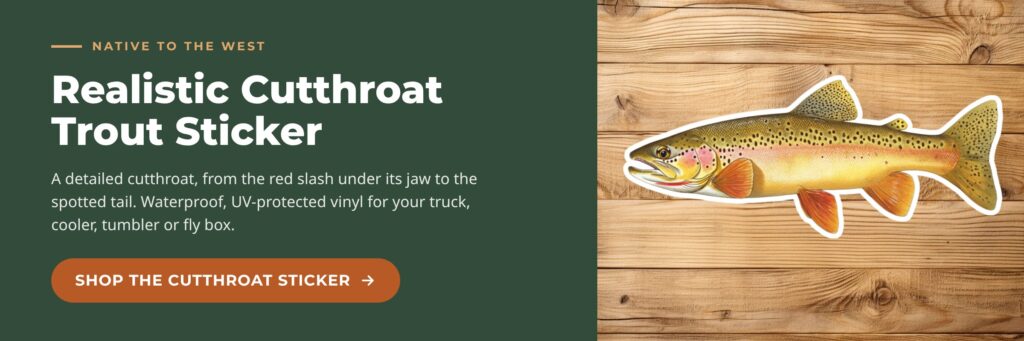
We recommend releasing every cutthroat you catch, whatever the rules allow. The Snake River fine-spotted cutthroat is a native fish found almost nowhere else.
Trout Species to Target
- Snake River Fine-Spotted Cutthroat The star of the river. They’re native, wild and found almost nowhere else, with a pattern of tiny, pepper-like spots. Thanks to catch-and-release, the river holds plenty of 12- to 18-inch fish. In spring they feed hard before spawning in May.
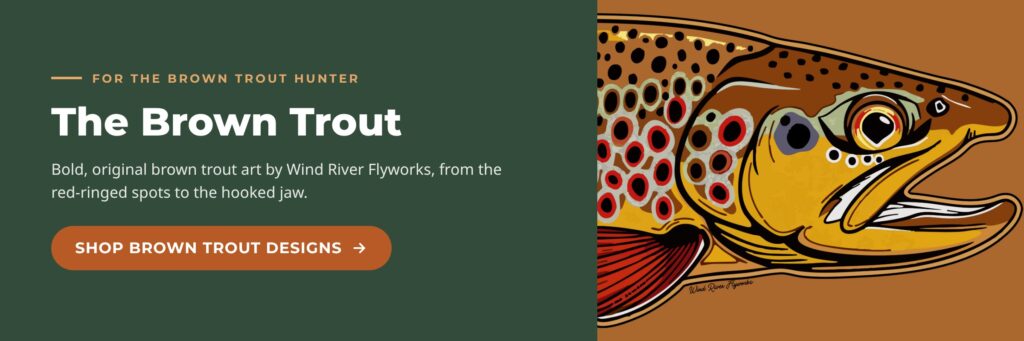
- Brown Trout Most common in the short stretch just below Jackson Lake Dam. They’re aggressive on streamers on gray spring days.
Mountain Whitefish Common throughout the river, and happy to eat a nymph when the trout won’t.
Snake River Fly Fishing: Top Patterns & Tactics
- Streamers: When: March and April, especially on cold or cloudy days What Works: Sculpin and leech patterns, plus olive, black or white Woolly Buggers and articulated streamers. Strip them slowly along banks, log jams and the edges of deep runs. Spring streamer fishing on the Snake often beats summer.
- Skwala Stoneflies:When: Mid-April, peaking in early May What Works: The first big dry fly of the year. Try a Chubby Chernobyl in olive or brown, size 8–10, along the banks, with a rubber-legged stonefly nymph as a dropper.
- Blue-Winged Olives: When: April and May, on cloudy, drizzly afternoons What Works: BWO dries, emergers and Parachute Adams in sizes 18–20. Look for rising fish in the soft water and back eddies.
- Midges: When: All spring, every day What Works: Zebra Midges and small midge dries in sizes 18–22, especially on calm afternoons and in the clear water below Jackson Lake Dam.
- Nymphs: When: All spring What Works: Rubber-legged stonefly nymphs, Pheasant Tails and Hare’s Ears in sizes 12–18, fished deep through riffles and runs when fish aren’t rising.
Techniques & Strategy
- Leader Setup: For dries, a 9–12 ft leader with 5X–6X tippet. For nymphs, a 7.5–9 ft leader with 3X–4X. For streamers, a short, stout leader of 0X–2X.
- Fish the Seams: The Snake is fast and braided. Trout hold right on the edge between fast and slow water, along banks, behind log jams and at the bottom of riffles. On this river, inches matter. Put the fly tight to the structure.
- Timing:
- March: streamers and midges, fishing the warmest part of the day
- April: Skwalas begin, BWOs on cloudy afternoons, streamers still strong
- Early May: Skwala peak, then watch for runoff
- Runoff (usually early May into June): the main river turns muddy. Fish the clearer water below Jackson Lake Dam or wait it out.
- Watch the Flows: Check the river gauges and local fishing reports before every trip. A warm, rainy week can start runoff early, sometimes as early as late April.
- Sections to Explore:
- Below Jackson Lake Dam: About five miles of slower, clearer tailwater. It stays fishable longer into spring, but the cutthroat here can be picky.
- Pacific Creek to Moose (Grand Teton): Fast, braided water with log jams and some of the best scenery anywhere. Open from April 1.
- Wilson to South Park: The classic float near Jackson, through a long levee stretch that holds plenty of big cutthroat.
- South Park to the canyon: Longer riffles, boulders and rock ledges. Often the easiest water to fish.
- Wade or Float: Much of the Snake is best fished from a drift boat or raft, with wading at gravel bars along the way. If you’re new to the river, a guided float is the fastest way to learn it. Rowing the Snake takes real experience, since channels change every year and log jams are dangerous.
Gear Checklist
- 5–6 wt rod, 9 ft, for dries and nymphs
- 6–7 wt rod with a sink-tip line for streamers
- Leaders from 0X for streamers down to 6X for midges and BWOs
- Split shot and strike indicators
- Streamers, Chubby Chernobyls, rubber-legged stonefly nymphs, BWOs, Parachute Adams, Zebra Midges, Pheasant Tails and Hare’s Ears
- Breathable waders with warm layers underneath. Spring mornings in Jackson often start below freezing.
- Wading boots with good grip, plus a wading staff for the fast Snake
- Fingerless gloves and a neck gaiter for cold mornings and windy afternoons [LINK: your Trout Series gloves and neck gaiter]
- Rain and wind jacket
- Polarized sunglasses and sunscreen. Spring sun at Jackson’s elevation is strong.
- Bear spray. Bears are waking up and hungry in spring.
- Your Wyoming fishing license
Top Fly Shops & Outfitters
Westbank Anglers (Wilson)
- Website: westbankanglers.com
- Phone: (307) 733-6483
- Address: 3670 Moose Wilson Rd, Wilson, WY 83014
Jackson Hole Fly Company (Jackson)
- Website: jacksonholeflycompany.com
- Phone: (800) 346-4339
- Address: 4065 S Pub Place, Jackson, WY 83001
Stop in for flies, current flows and the latest word on runoff. In spring, conditions on the Snake can change in a day.
Pro Tips for Spring Success
- Sleep in a little. Spring fishing is best from late morning through mid-afternoon, once the water warms.
- Love the bad weather. Cloudy, drizzly days bring the best BWO hatches and the best streamer fishing.
- Fish the banks. Spring cutthroat hug the edges, log jams and soft seams.
- Watch for runoff. When the river turns muddy, head to the water below Jackson Lake Dam or plan around it.
- Leave spawning fish alone. Cutthroat spawn in May, often in side channels and small tributaries.
- Hire a guide for your first float. The Snake’s braided channels shift every year.
Stay Safe on the Snake
- Cold water: Spring water is near freezing. A fall in fast water is dangerous, so wade carefully and wear a wading belt.
- Log jams and braids: If you float, scout unfamiliar water, check with a local shop about new hazards, and always wear a life jacket.
- Wildlife: Bears, moose and bison are active in spring. Carry bear spray, and give moose plenty of room. They’re common in the willows along the Snake.
Sample Spring Day on the Snake
Time | Fly / Technique | Target |
10 AM | Olive sculpin or Woolly Bugger, stripped slowly along the banks | Cutthroat and browns |
12 PM | Skwala dry with a rubber-legged nymph dropper | Cutthroat |
2 PM–4 PM | BWO emerger or Parachute Adams on cloudy afternoons | Rising cutthroat |
4 PM | Back to streamers along log jams | Bigger cutthroat |
Final Thoughts
Spring on the Snake is short, unpredictable and absolutely worth it. Catch the window before runoff, and you’ll find hungry native cutthroat, the first big dry flies of the year, and the Tetons all to yourself.
Check the flows, dress warm, and release those fine-spotted cutthroat so they’re there for the next angler. Stop in at Westbank Anglers or Jackson Hole Fly Company for flies and the latest on runoff, and grab a Wyoming trout sticker on your way to the river.
Tight lines, and see you on the Snake!
Shop This Article
Stickers and gear that go with this guide, drawn by Nick and printed in the USA.
-
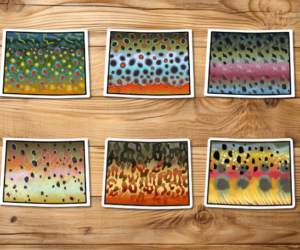
Wyoming Trout 6-Sticker Set
$9.99 – $12.99Price range: $9.99 through $12.99 Select options This product has multiple variants. The options may be chosen on the product page -
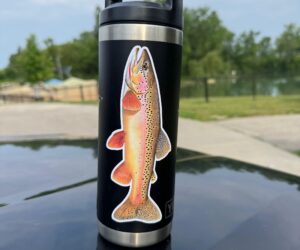
Realistic Cutthroat Trout Sticker
$5.99 – $6.99Price range: $5.99 through $6.99 Select options This product has multiple variants. The options may be chosen on the product page -
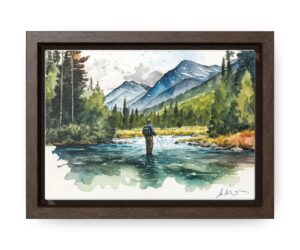
“A Cloudy Day on Pacific Creek” Watercolor Print
$45.47 – $58.43Price range: $45.47 through $58.43 Select options This product has multiple variants. The options may be chosen on the product page